


In 2026, more designers are choosing to let materials look like themselves.
That means less opaque paint, fewer heavily pigmented stains, and a noticeable move away from high-gloss surfaces that flatten the character of wood. In their place, we are seeing natural grain, knots, saw marks, tonal variation, and age become part of the design language.
This shift is often described as material honesty. It is not about leaving every surface unfinished. It is about protecting a material without disguising its identity.
For reclaimed wood, that distinction matters. Every board has already lived a life. It may have formed part of a barn, a train box car, a commercial building, or a historic floor. When we preserve the grain and patina, we are not simply creating a beautiful surface. We are allowing the material’s story to remain visible.
What Is Material Honesty?
Material honesty means using materials in a way that respects what they are.
Wood should look like wood. Metal should be allowed to show its structure. Stone should retain some of its natural variation. The goal is not visual perfection. The goal is a finished space where texture, construction, age, and origin are allowed to contribute to the design.
This approach is gaining attention for several reasons:
- People are craving authenticity.
Mass-produced surfaces can look attractive, but they often repeat the same colors and patterns from room to room. Visible grain brings back variation. No two boards respond to light in exactly the same way, and no two reclaimed pieces carry the same marks. - Natural materials create a stronger connection to the outdoors.
Biophilic design is about more than adding plants. It also includes natural textures, organic forms, daylight, and materials that help a room feel grounded. Wood grain adds a quiet reminder of forests, trees, weather, and time. - Sustainability is becoming more tangible.
Reclaimed wood makes conscious design visible. Instead of choosing a new surface made to imitate age, homeowners and commercial clients can use material that already has a history and a purpose. - Perfect surfaces are losing their appeal.
Uniformity can feel sterile. Small knots, old nail holes, color shifts, and repaired areas give a room a sense of life. These details show that the piece was made from something real.
The result is not a return to a particular decorating style. It is a move toward interiors that feel more collected, tactile, and personal.
What Visible Wood Grain Actually Does to a Room
Wood grain is not just a pattern on a surface. It changes the way a room is experienced.
1. It adds depth
A painted or heavily stained surface usually presents one consistent visual field. Natural grain creates layers. The eye moves through light and dark areas, long lines, knots, checks, and subtle shifts in tone.
That depth is especially effective on large surfaces such as a kitchen island, dining table, fireplace mantel, or wall installation. Instead of becoming a flat block of color, the wood becomes part of the architecture.
2. It introduces warmth
Even in a modern space with concrete, glass, tile, or black metal, natural wood can soften the overall feeling. Warm browns, muted ochres, honey tones, and weathered grays make hard materials feel more approachable.
A visible grain also reflects light gently. Matte and low-sheen finishes allow the surface to look warm without creating sharp glare.
3. It creates visual movement
Grain guides the eye across a room. Long lines can emphasize the length of a dining table or countertop. Irregular patterns can draw attention to a mantel or entryway. A live edge can break up the straight lines of cabinetry and walls.
This movement makes a room feel designed without making it feel overly decorated.
4. It makes the piece unique
A manufactured finish can be duplicated. A particular piece of reclaimed wood cannot.
The marks on a salvaged board may reveal how it was used, handled, or exposed to the elements. On a live edge slab, the shape of the tree remains part of the final design. On reclaimed transportation planks, industrial scoring and wear can become a defining feature.
That uniqueness is one reason natural wood works so well in both private homes and commercial spaces. It gives people something to notice and remember.
5. It creates emotional grounding
Wood carries a visual sense of permanence. It suggests shelter, work, growth, and time. When we use it in a room where people gather, cook, meet, or rest, it can make the space feel more settled.
That emotional quality is difficult to achieve with a perfectly uniform surface. Character gives the material a presence of its own.

How We Preserve Grain and Character
Leaving the grain visible does not mean skipping the craftsmanship. In fact, natural finishes require careful preparation because there is nowhere for mistakes or excessive color to hide.
At Reclaimed Enterprises, we approach each piece as a balance between preservation and performance.
1. We begin with the material itself
The first decision is what to keep.
Some boards have dramatic grain. Others have nail holes, saw marks, checks, faded color, or a weathered surface that tells the strongest story. We do not treat every imperfection as a problem to remove. We evaluate how the material will be used and which details contribute to the finished piece.
2. We mill with restraint
Milling should make old wood usable without erasing its identity. We flatten, size, join, and smooth the material where necessary, but we avoid removing more character than the project requires.
For a dining table or kitchen island, the surface must be comfortable and functional. For a wall or ceiling installation, more texture may be appropriate. The right amount of preparation depends on the application.
3. We favor light-touch finishes
For many projects, a matte or low-sheen oil or hardwax-style finish can protect the surface while allowing the grain to remain clear. These finishes can enrich the wood’s natural color without covering it in a heavy layer of pigment.
The goal is to let the grain remain legible. A finish should support the wood, not compete with it.
We also explain care requirements before a piece leaves the shop. Wood finishes can repel liquids, but they are not liquid-proof. Surfaces should be kept dry, protected from heat, and cleaned with mild soap and warm water when appropriate. Our policies and care guide includes more practical information.
Pro Tip: If you are choosing a finish for a prominent wood surface, test it on a sample from the same board or material batch. A finish can deepen color and increase contrast. Seeing the actual wood first helps you preserve the character you want instead of guessing from a color chart.
Where Restraint Matters
Natural wood is expressive. That is part of its appeal, but it also means it should be used thoughtfully.
A room does not need visible grain on every surface. Too many competing patterns can make a space feel busy rather than grounded. In many projects, one strong wood element is more effective than several unrelated ones.
Consider these guidelines:
- Choose a focal point. A live edge slab, custom island top, mantel, or dining table can carry the visual weight of the room.
- Give the grain room to breathe. Pair expressive wood with quieter paint colors, simple hardware, natural textiles, or restrained stone.
- Match the finish to the use. A decorative wall plank and a heavily used kitchen countertop have different performance needs.
- Do not confuse character with neglect. Cracks, checks, and old marks can be beautiful, but the piece still needs to be properly prepared, stabilized, and finished for its intended purpose.
- Let different wood tones coexist carefully. They do not all need to match, but they should share a relationship through undertone, scale, or finish.

How the Movement Appears in Real Projects
At Reclaimed Enterprises, material honesty can take many forms.
A live edge top may become the centerpiece of a dining room, boardroom, bar, or kitchen. A custom kitchen island top can bring visible grain into a space that still feels clean and contemporary.
A reclaimed wood mantel can give a fireplace architectural weight without requiring a glossy or overly formal finish. Our wall and ceiling accent planks can add texture overhead or create a focused feature wall while preserving the variation between individual boards.
For floors, reclaimed oak cargo plank carries industrial wear that would be difficult to reproduce convincingly. For DIYers, designers, architects, and builders, our shop offers materials that can become shelving, doors, furniture, counters, or entirely new applications.
The same principle applies to our custom dining tables and commercial fixtures. We shape the material for modern use while allowing its previous life to remain part of the design.
A Floor With a Story No Stain Could Recreate
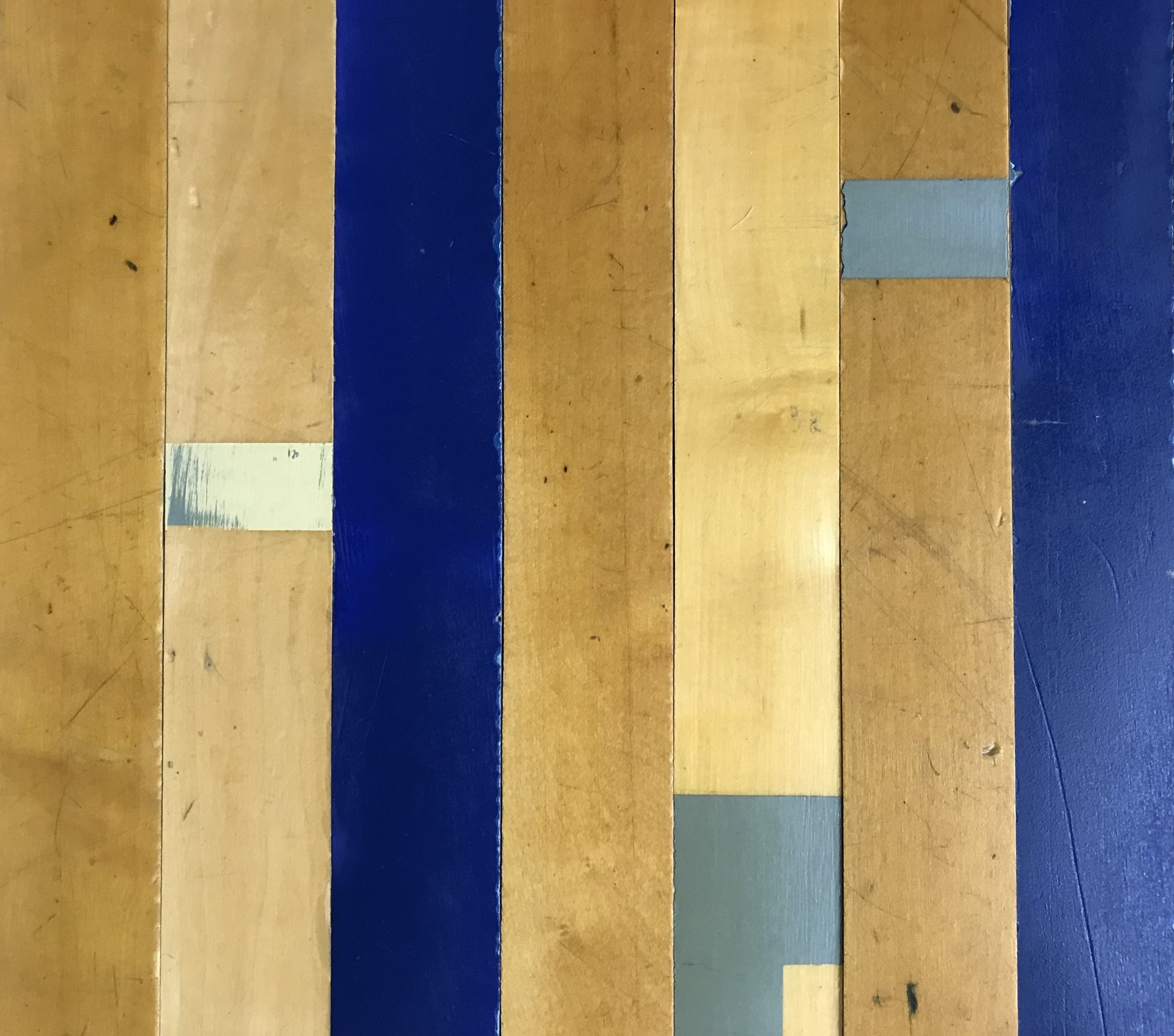
One of the clearest examples is wood from the original Creighton University gym.
The surface carries evidence of a place where people gathered, competed, and celebrated. Its color variation and wear are not decorative effects added in a factory. They are records of use.
We can transform that material into furniture and smaller pieces, but we cannot manufacture the history it already contains. A dark stain might imitate age, but it could never reproduce that particular story.
You can explore more examples in our Gallery.
A More Meaningful Definition of Luxury
Luxury is changing.
It is less about making every surface flawless and more about choosing materials with substance. It is the confidence to use one remarkable slab instead of a predictable pattern. It is the pleasure of running your hand across a mantel and feeling the marks that make it different from every other mantel. It is knowing that a table, island, or wall feature was made from material that already had a life before it entered your home or business.
Visible grain supports that kind of luxury because it cannot be separated from craftsmanship. Someone had to select the board, understand its structure, preserve its strongest features, and finish it carefully enough for daily use.
That is the heart of making new from old.
If you are planning a kitchen island, fireplace, dining table, commercial fixture, accent wall, ceiling installation, or DIY project, we invite you to explore our products, visit the shop, or stop by our Omaha showroom and workshop. Bring us your ideas, and we will help you find the material whose grain, patina, and history belong in your space.