


A wood accent wall can bring warmth and texture to a space without making it feel old-fashioned or overly rustic. The key is choosing a layout, tone, and scale that suit the room, and letting the wood’s natural character do the talking.
Reclaimed wood is especially well suited to accent walls. Boards salvaged from barns, blighted houses, and train box cars may carry old saw marks, nail holes, faded color, and patina that new lumber can’t replicate. Each board has had a previous life. Together, they add a sense of history as well as a distinctive, tactile finish.
Here are seven wood accent wall ideas to help you find a direction that feels right for your space.
1. Classic horizontal planks
Horizontal boards are a timeless starting point. Their long lines can make a room feel wider and create a calm backdrop for furniture, artwork, or shelving. The look works in living rooms, bedrooms, dining areas, and commercial spaces such as cafés or reception areas.
To keep horizontal planks feeling current, pair them with simple furnishings and a considered palette. Light, weathered boards sit comfortably alongside modern neutrals, while deeper browns can bring warmth to a room with pale walls or flooring.
Practical tip: Lay out board lengths before installation, and stagger the end joints so they don’t form repeated vertical lines. A mix of tones can feel natural when distributed across the wall rather than grouped into obvious bands.
2. Vertical planks for a sense of height
Vertical boards draw the eye upward, making them a useful choice for rooms with lower ceilings or narrow areas that need a little visual lift. Try them in an entryway, stairwell, home office, or behind a bed. They suit modern, Scandinavian-inspired, and transitional interiors, especially when the wood has a restrained palette.
The boards can be installed in a consistent width for a clean, orderly look, or varied subtly to bring in more character. A natural, low-sheen finish keeps the surface from looking overly formal.
Practical tip: Check that the wall is level and plan the top and bottom cuts before you begin. Uneven floors or ceilings can make vertical lines more noticeable, so decide in advance whether trim or a deliberate reveal will finish the edges.
3. Herringbone or chevron for a crafted focal point
For a pattern with movement, arrange the boards in herringbone or chevron. Both create a strong visual feature that works well in a dining nook, behind a reception desk, or as a bedroom headboard wall. Herringbone has a staggered, interlocking pattern; chevron boards meet at consistent angles to form a continuous V.
Because the pattern already draws attention, the wood can stay relatively simple. A unified color range helps the layout stand out without competing with other finishes. These designs suit contemporary and transitional spaces where a little geometry adds interest.
Practical tip: Make a scaled layout before cutting. Angled patterns generate more offcuts than straight rows, so measure carefully and plan how the pattern will meet corners, outlets, and trim.
4. Shiplap-style boards in a modern space
Clean-lined, horizontal boards can give a wall the rhythm of shiplap without leaning on a farmhouse look. Use a quieter wood selection, keep the rest of the room uncluttered, and pair the wall with contemporary lighting, metal details, or smooth surfaces such as stone.
This style works in home offices, bedrooms, kitchens, and commercial interiors. A restrained finish lets the grain add warmth while the even lines keep the overall effect crisp.
Practical tip: Decide on the spacing and edge detail before installation. A consistent reveal between boards creates a more architectural feel; a tighter fit lets the wood’s changing tones and grain take center stage.

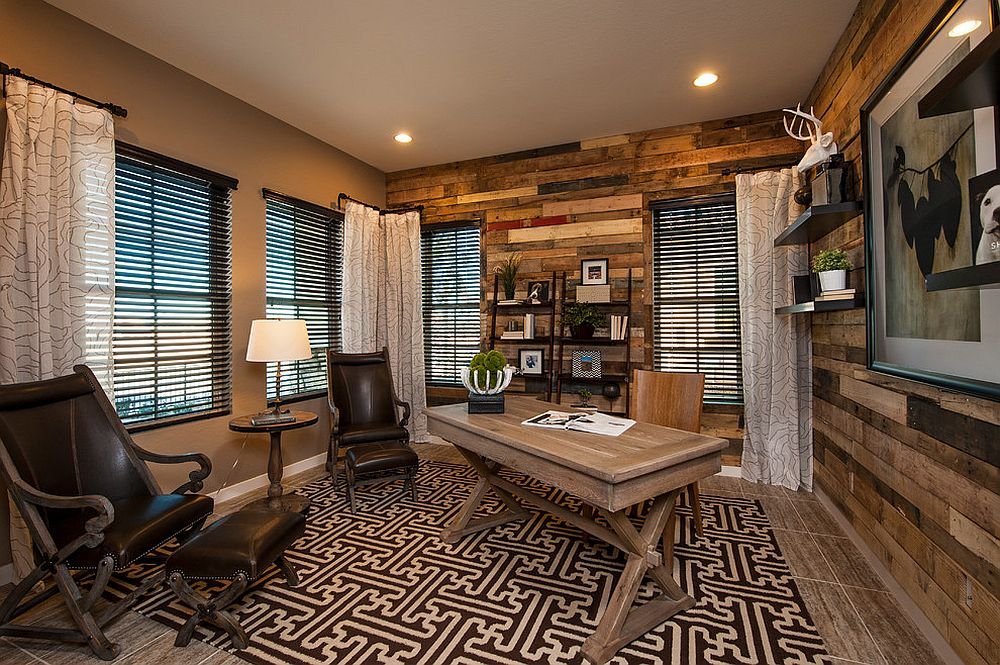
5. Mixed-tone patchwork from reclaimed boards
A patchwork wall brings together boards with different shades, grain patterns, and marks. It can feel bold and expressive, or quiet and layered, depending on how much contrast you choose. This look works well behind a sofa, in a creative workspace, or on a feature wall in a shop or hospitality setting.
The appeal is in the variation: a pale, weathered board beside a darker, more marked one gives the wall depth and a sense of history. Reclaimed boards from different sources may each have a distinct character, which makes careful arrangement part of the design.
Practical tip: Sort the boards on the floor before fastening them. Spread lighter and darker pieces across the whole design, and step back often to check the balance from across the room.

6. A full-height statement wall behind a bed, sofa, or TV
Sometimes the strongest design move is to cover one entire wall, from floor to ceiling. Behind a bed, reclaimed wood can create a warm, grounded backdrop. Behind a sofa, it helps anchor the seating area. Around a television, it gives the screen a more integrated setting.
This approach works across many styles, from minimalist rooms that need organic texture to industrial interiors that benefit from warmth. Choose boards that complement the room’s other large surfaces, and keep nearby décor simple enough to let the wood remain the focal point.
Practical tip: Consider light before choosing darker or more heavily textured boards. Natural daylight, wall sconces, or indirect lighting can reveal the grain and keep the surface from feeling visually heavy. For a fireplace wall, confirm that the materials and clearances meet the fireplace manufacturer’s instructions and local requirements.
7. Partial walls, niches, and smaller feature zones
A wood accent wall doesn’t have to cover an entire room-height surface. A half-wall can define an entryway or add texture below a desk. A recessed niche, stairwell landing, or office backdrop can bring in character without competing with the rest of the interior.
Smaller applications are a useful way to introduce reclaimed wood in spaces that already have plenty of pattern or color. They also give designers and DIYers room to play with a framed edge or a clean transition to painted drywall.
Practical tip: Treat the edges as part of the design. Plan a neat trim detail, a consistent reveal, or a deliberate endpoint so the wood looks finished rather than abruptly stopped.
A few planning details make a big difference
Before selecting boards, measure the height and width of the area you plan to cover. Multiply those dimensions to find the wall’s square footage. Measure doors, windows, and other openings separately; subtract their area for an estimate, but allow for extra cuts around them. Use the actual exposed face coverage of the boards, not just their nominal width, and ask your supplier how much additional material makes sense for your layout.
Before installation, check that the wall is sound, dry, and suitable for the intended application. Locate studs and utilities, and plan around outlets and switches. Reclaimed wood varies, so follow the supplier’s guidance for inspection, preparation, and acclimation in the room where it will be installed. Choose fastening methods appropriate to the boards and wall assembly; heavier boards typically need secure mechanical fastening into framing or another suitable substrate.
For the finish, test a sample first. A matte or light-touch protective finish can help preserve the grain and patina without adding too much shine. Lighting matters, too: soft, warm illumination can make texture more visible, while light grazing across the surface will emphasize both the grain and the boards’ natural variation.
Pro Tip: Make a dry layout before you install anything. Arrange the boards in the pattern you want, photograph the layout, and adjust the color balance from across the room. It’s much easier to move a board on the floor than after it’s fastened to the wall.
Let the wood tell its story
At Reclaimed Enterprises, we turn reclaimed, remilled, and repurposed wood into wall and ceiling planks with character you can see and feel. Our plank selection includes options such as old-growth remilled wood, silver-gray boards, and resawn transportation planks; material varies, and every piece brings its own history. Explore our Wall & Ceiling Planks to see what may suit your project, browse the Gallery for examples, or visit the Shop.
Whether you’re planning a small entryway feature or a full-height statement wall, we’d be glad to help you think through the material and layout. Explore our reclaimed wood planks or contact us to talk about your project, and bring a piece of history into your space.