


Reclaimed Wood for Commercial Spaces: Bars, Restaurants, Offices & Retail





Commercial spaces have to do more than look good. They need to create an experience, communicate a brand and stand up to everyday use. For businesses in Omaha and throughout the surrounding area, reclaimed wood offers a distinctive way to accomplish all three.
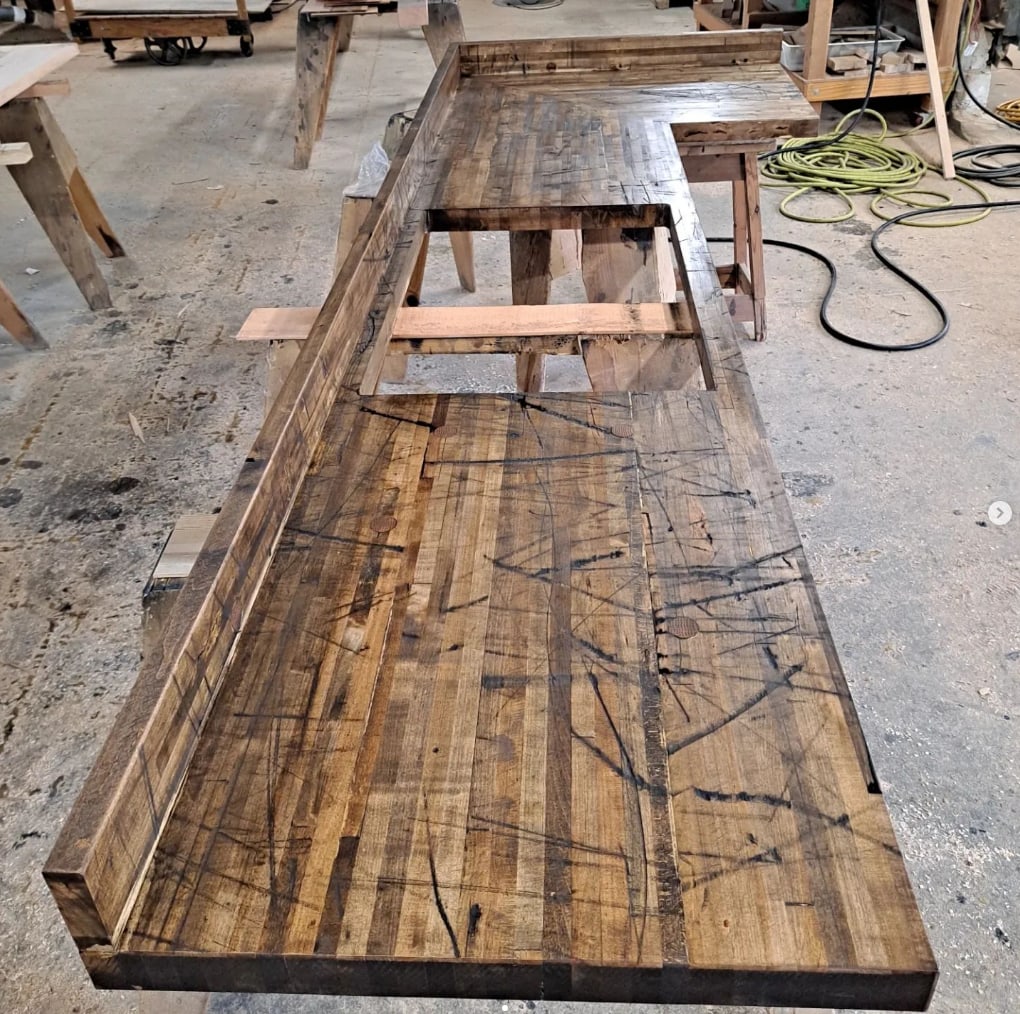
From restaurant bars and retail displays to office reception areas and custom tables, reclaimed wood brings natural texture, warmth and history into commercial interiors. Each board can have its own grain, knots, nail holes, saw marks and weathered character, giving a space a look that is difficult to reproduce with mass-produced materials.
At Reclaimed Enterprises, we work with reclaimed wood and custom woodworking to help businesses create spaces that feel intentional, memorable and built around their individual identity.
Why Use Reclaimed Wood in a Commercial Space?
Commercial interior design is increasingly focused on creating environments that customers and employees actually want to spend time in. Reclaimed wood can help make a space feel more welcoming while adding visual interest without relying on overly complicated design elements.
Unlike perfectly uniform new materials, reclaimed wood has natural variation. That variation can become part of the design.
Reclaimed wood can also work across a wide range of styles, including:
- Industrial
- Rustic
- Modern farmhouse
- Contemporary
- Lodge-inspired
- Transitional
- Eclectic
- Historic or heritage-inspired designs
The result doesn't have to look like a traditional rustic cabin. With the right wood selection, finish and fabrication, reclaimed wood can be incorporated into sophisticated modern commercial interiors.
Reclaimed Wood for Bars & Restaurants
Restaurants and bars are some of the most natural applications for reclaimed wood because the material can contribute directly to the atmosphere of the space.
Custom Bar Tops
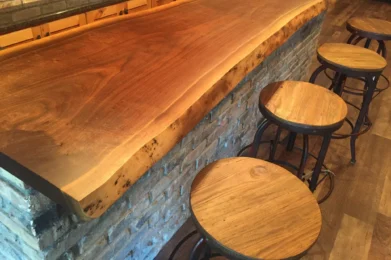
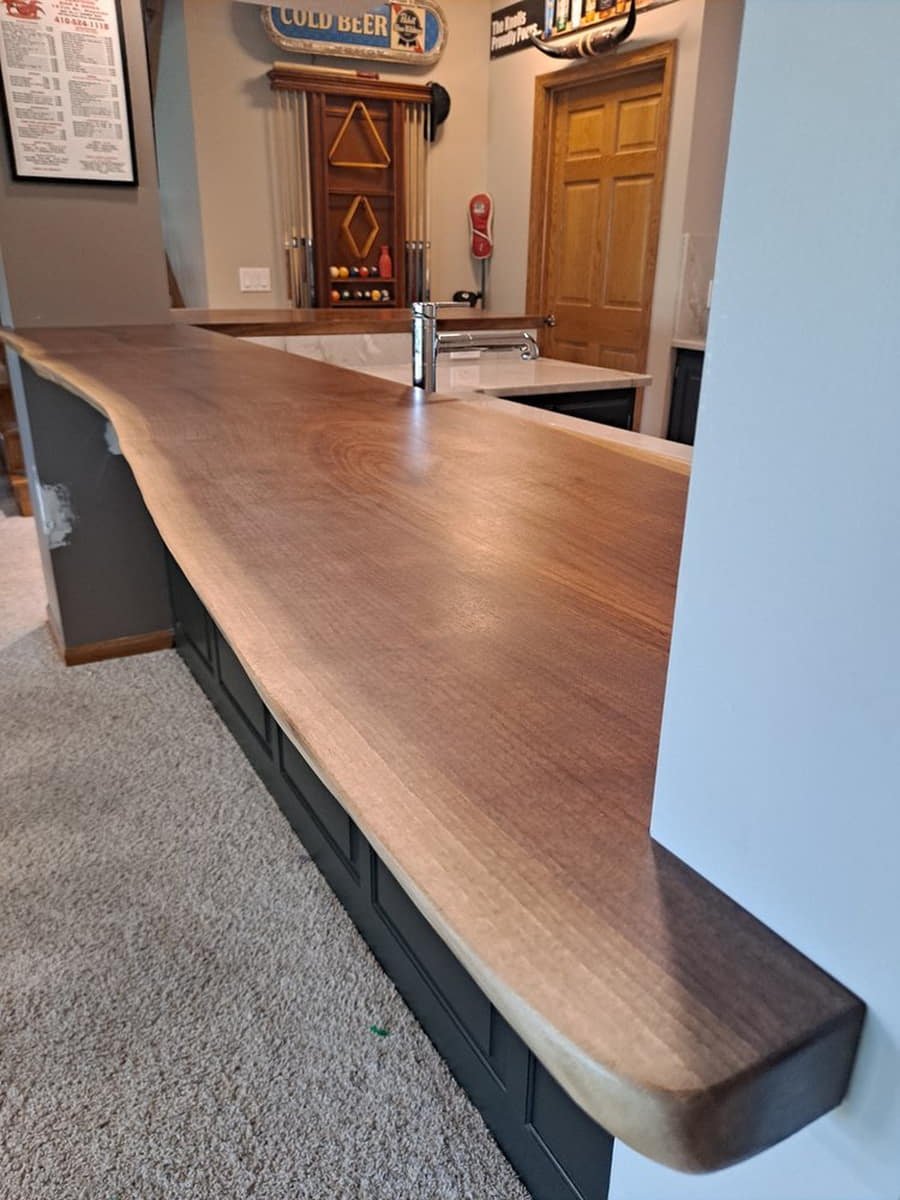
A reclaimed wood bar top can become one of the defining features of a restaurant, brewery, cocktail bar or neighborhood pub.
Long boards, visible grain and natural imperfections can create a substantial focal point behind which the rest of the interior design can be built.
Reclaimed wood can also be combined with materials such as:
- Steel
- Black metal
- Brick
- Stone
- Concrete
- Tile
- Glass
This combination works particularly well for restaurants and bars looking for an industrial or contemporary aesthetic.
Restaurant Tables
Custom reclaimed wood dining tables can give restaurants a more distinctive appearance than standardized commercial furniture.
Depending on the concept, tables can be designed as communal tables, two-top tables, larger dining tables or custom pieces built specifically around the restaurant's floor plan.
For Omaha restaurants, locally sourced or regionally reclaimed materials can also contribute to a sense of place—helping a new establishment feel connected to the character of the area.
Accent Walls & Feature Areas
Reclaimed wood doesn't have to cover an entire restaurant.
A feature wall behind the host stand, bar or dining area can create a dramatic focal point while allowing the rest of the interior to remain relatively simple.
This can be especially effective when reclaimed wood is paired with signage, a restaurant logo, lighting or other branded elements.
Reclaimed Wood in Office Interiors
Office design has changed considerably. Businesses are increasingly interested in work environments that feel comfortable, welcoming and reflective of their company culture.
Reclaimed wood can help soften an otherwise highly contemporary office.
Reception Desks
The reception area is often the first physical interaction a client has with a business.
A custom reclaimed wood reception desk can create an immediate impression of craftsmanship and quality.
The wood can be incorporated into the front of the desk, countertop, surrounding wall or architectural details.
Conference Tables
A large reclaimed wood conference table can serve as both a functional workspace and a centerpiece for an office.
Custom fabrication allows the table to be designed around the room rather than forcing the room to accommodate a standard furniture size.
This can be particularly useful for offices with unusual dimensions or specific seating requirements.
Accent Walls
A reclaimed wood accent wall can add warmth to:
- Reception areas
- Conference rooms
- Executive offices
- Break rooms
- Collaborative spaces
- Waiting areas
The goal isn't necessarily to make an office look rustic. Instead, reclaimed wood can provide contrast against clean walls, modern furniture and contemporary lighting.
Reclaimed Wood for Retail Spaces
Retail environments rely heavily on presentation. Customers form impressions quickly, and the physical environment can influence how they perceive a brand.
Reclaimed wood can help retailers create displays that feel authentic and visually distinctive.
Product Displays
Custom shelving and display fixtures made from reclaimed wood can turn merchandise into part of the overall interior design.
For example, reclaimed wood shelving can work particularly well for:
- Clothing boutiques
- Home décor stores
- Outdoor retailers
- Specialty food stores
- Gift shops
- Furniture stores
- Artisan markets
Checkout Counters
A custom reclaimed wood checkout counter can provide a strong focal point without requiring an elaborate architectural renovation.
The material can be combined with metal framing, stone surfaces or other contemporary finishes to create a look that matches the brand.
Branded Feature Walls
Retailers can also use reclaimed wood as the background for logos, signage or product displays.
The natural texture provides visual depth while helping signage stand out.
Reclaimed Wood for Hotels, Breweries & Hospitality Spaces
Commercial applications extend beyond traditional offices, restaurants and stores.
Hospitality businesses can use reclaimed wood throughout a property to create a consistent visual identity.
Potential applications include:
- Hotel lobby tables
- Reception desks
- Bar tops
- Restaurant furniture
- Guest room headboards
- Accent walls
- Shelving
- Communal tables
- Lounge furniture
Breweries and taprooms can be especially well suited to reclaimed materials because the aesthetic naturally complements the handcrafted nature of the product.
Choosing the Right Reclaimed Wood for a Commercial Project
Not every reclaimed board is appropriate for every application.
Commercial projects require careful consideration of the intended use, dimensions, finish and environment.
Before selecting material, consider:
1. The Design Style
Do you want the wood to look heavily weathered and rustic, or would a more refined appearance work better?
The character of the material should complement the overall brand.
2. The Application
A decorative wall treatment has different requirements than a bar top, dining table or reception desk.
The intended application should influence how the wood is selected, prepared and finished.
3. Color & Grain
Reclaimed wood can vary significantly in color and grain depending on its history and species.
Selecting boards intentionally can help create a more cohesive finished installation.
4. Durability & Maintenance
Commercial spaces experience frequent use, so the appropriate finish and construction methods are important.
Tables, counters and other high-contact surfaces should be designed with their specific environment and maintenance requirements in mind.
5. Dimensions
One of the advantages of custom woodworking is the ability to build around the actual space.
Rather than designing around whatever dimensions happen to be available from mass-produced furniture, a custom piece can be created to fit the room.
Choosing the Right Reclaimed Wood for a Commercial Project
Omaha has a unique mix of historic architecture, established neighborhoods, new development and growing commercial districts.
That makes reclaimed wood particularly interesting for local businesses.
A restaurant in the Old Market may want materials that complement the area's historic character. A modern office in Midtown or a newly developed commercial space may instead use reclaimed wood as a contrast to contemporary architecture.
Businesses throughout Omaha, Elkhorn, West Omaha and the surrounding communities can use reclaimed wood in very different ways while still achieving a distinctive, locally grounded aesthetic.
For businesses renovating an existing space, reclaimed wood can also provide a way to incorporate warmth and character without completely changing the architectural structure.
Custom Reclaimed Wood vs. Mass-Produced Commercial Furniture
Standard commercial furniture can be practical, but it often comes with limitations.
Dimensions, materials, finishes and styles may be predetermined.
Custom reclaimed wood furniture provides much more flexibility.
A business can choose:
- The overall dimensions
- Wood character
- Edge profile
- Finish
- Metal or wood base
- Table configuration
- Storage requirements
- Branding elements
- Installation details
This makes custom fabrication especially useful when the furniture needs to work with an existing floor plan or support a particular brand identity.
Choosing the Right Reclaimed Wood for a Commercial Project
Omaha has a unique mix of historic architecture, established neighborhoods, new development and growing commercial districts.
That makes reclaimed wood particularly interesting for local businesses.
A restaurant in the Old Market may want materials that complement the area's historic character. A modern office in Midtown or a newly developed commercial space may instead use reclaimed wood as a contrast to contemporary architecture.
Businesses throughout Omaha, Elkhorn, West Omaha and the surrounding communities can use reclaimed wood in very different ways while still achieving a distinctive, locally grounded aesthetic.
For businesses renovating an existing space, reclaimed wood can also provide a way to incorporate warmth and character without completely changing the architectural structure.
Custom Reclaimed Wood vs. Mass-Produced Commercial Furniture
The best commercial interiors don't simply fill a room with furniture. They create an experience.
Reclaimed wood can help establish that experience through natural texture, craftsmanship and material with a visible history.
Whether you're designing a new Omaha restaurant, remodeling an office, opening a retail store or upgrading a brewery or hospitality space, reclaimed wood can be incorporated into everything from a single feature wall to a complete collection of custom furniture.
At Reclaimed Enterprises, we can help turn reclaimed material into functional pieces designed specifically for your commercial environment.
Planning a commercial project in Omaha or the surrounding area? Contact Reclaimed Enterprises to discuss custom reclaimed wood furniture, tables, bar tops, shelving and other commercial woodworking projects.
Contact Us Today for a FREE Quote
Have a Project? Contact Us for a Quote